
Planning your first trip to Cebu, Philippines? You’ve picked the right island. Cebu is one of the most rewarding destinations in Southeast Asia and one of the most accessible for first-time visitors. There are international flights directly into Mactan-Cebu International Airport, a reliable bus network, and enough infrastructure that you can navigate the whole island independently without stress.
But what makes Cebu genuinely special is the range of experiences packed into a single island. You can swim alongside whale sharks at dawn in Oslob. You can canyon through turquoise river gorges at Kawasan Falls. You can snorkel through a sardine run so dense it blocks out the light at Moalboal. You can eat the best lechon of your life on a plastic stool in Cebu City at 10pm. And you can do all of it in four days or stretch it into a week and still find new things to love.
This Cebu travel guide for 2026 covers everything first-time visitors need to know flights from the UK, getting around, the best things to do in Cebu, where to stay, how much to budget, and dedicated advice for families with children, couples and solo travellers.
Cebu Travel Guide: Table of contents
- Getting Around Cebu: Complete Transport Guid
- What to do in Cebu City: Top attractions & food guide
- Best things to do in Southern Cebu: complete activity guide
- North Cebu Travel Guide: Bantayan island & Malapascua island
- Cebu with Kids: Complete family travel guide 2026
- Cebu for Couples: Most romantic experiences & Travel tip
- Cebu for solo travellers: Safety, tips & best experiences
- Where to stay in Cebu: Best areas & accommodation guide
- Cebu itinerary ideas for first-timers: 3 to 7+ Days
- Cebu travel costs & budget guide 2026
- Best time to visit Cebu, Philippines in 2026
- What to pack for Cebu Philippines: packing list 202
- Cebu Philippines, Travel FAQs 2026
Cebu Highlights: What to See and Do in Cebu, Philippines
Cebu is a long, thin island in the central Philippines, part of the Visayas region, stretching about 225km from north to south. It’s the country’s second most important city after Manila, a major transport hub, and home to some of the most spectacular natural experiences in Southeast Asia.
Here’s a quick overview of Cebu’s top attractions by area, so you can plan your route before diving into the details:
| Area | Top Attractions | Travel Time from Cebu City |
|---|---|---|
| Cebu City | Magellan’s Cross, Basilica del Santo Niño, Carbon Market, lechon dining | — |
| Oslob, South Cebu | Whale shark watching, Tumalog Falls, Sumilon Island sandbar | 4–5 hrs by bus |
| Moalboal, South Cebu | Sardine run, sea turtle snorkelling, scuba diving | 2–2.5 hrs by bus |
| Kawasan / Badian | Kawasan Falls canyoneering, Kawasan Falls swimming | 2.5–3 hrs by bus |
| Bantayan Island | White sand beaches, family-friendly slow travel | 3.5–4 hrs + 1 hr ferry |
| Malapascua Island | Thresher shark diving, Bounty Beach | 3.5–4 hrs + 30 min ferry |
How to Get to Cebu from the UK: Flights & Routes
There are no direct flights from the UK to Cebu. All routes connect through a major Asian hub, typically Manila, Kuala Lumpur, Singapore or Dubai. Total travel time from London, including connection is 18–24 hours depending on your route and layover.
Best flight routes from the UK to Cebu in 2026:
- London → Manila → Cebu: Philippine Airlines flies direct London to Manila; Cebu Pacific and PAL cover Manila–Cebu multiple times daily (approx. 1h 35m domestic leg). Most popular routing
- London → Kuala Lumpur → Cebu via AirAsia. Often the cheapest overall option; KL is a good airport for a long layover
- London → Singapore → Cebu via Singapore Airlines or Scoot. Singapore Changi is one of the best airports in the world for a connection with children
- London → Dubai → Manila → Cebu via Emirates. Good if you prefer a premium carrier and want to avoid red-eye connections
Search cheap flights to Cebu from the UK on Expedia
💡 Money-saving tip: Book your Manila–Cebu domestic leg separately with Cebu Pacific as early as possible — ideally 6–8 weeks before departure. The same seat can cost up to 3x more when booked last-minute. Set a Cebu Pacific fare alert to catch flash sales.
Tips for Flying to Cebu with Children
The long-haul journey is the biggest hurdle for families visiting Cebu. To make it easier: choose a routing via Singapore or Kuala Lumpur — both airports have excellent family facilities and are far less stressful than a tight Manila connection. Book an overnight flight on the longest leg so children sleep through it. Pre-order children’s meals directly with your airline — most don’t guarantee them without advance notice. Pack a carry-on bag with snacks, entertainment downloads, and a spare change of clothes for each child. Cebu Pacific has a family seating policy; request adjacent seats when booking.
Getting Around Cebu: Complete Transport Guid
Arriving at Mactan-Cebu International Airport
Mactan-Cebu International Airport (MCIA) sits on Mactan Island, connected to Cebu City by the Marcelo Fernan Bridge. Transport options from the airport:
- Official metered taxi: ₱300–₱500 to the city centre. Use only the official queue inside the terminal, ignore touts outside the exit doors
- Grab (ride-hailing app): Download before you land. Usually cheaper than taxis with upfront pricing and no negotiation. Pick up from the designated Grab zone outside arrivals. Strongly recommended for families and first-timers
- Airport bus to SM City Cebu: ₱240, approximately 45–60 minutes. Best value option for solo travellers, SM City is a useful first stop for a local SIM card, cash withdrawal and lunch before heading south
Getting Around Cebu City
- Grab the most convenient, reliable and transparent on price. Best for tourists throughout the city
- Jeepney the iconic Filipino shared minibus. Very cheap (₱13 minimum fare), but routes are hard to follow without local knowledge. Worth trying once for the experience
- Tricycle – motorbike with a sidecar, ideal for short hops. Always agree on the fare before getting in
How to Get from Cebu City to Southern Cebu
All buses to Southern Cebu depart from the South Bus Terminal in Cebu City. Take a Grab from your hotel, it’s about ₱80–₱120 from the city centre.
- Cebu City to Oslob: Regular and air-conditioned buses, ₱350–₱450, 4–5 hours
- Cebu City to Moalboal: ₱150–₱200, approximately 2–2.5 hours
- Cebu City to Badian (Kawasan Falls): ₱130–₱180, approximately 2.5–3 hours
💡 For families and groups: A private van hire from Cebu City to Oslob costs ₱3,000–₱5,000 for the whole vehicle — split between 4 people it’s similar to bus fares but vastly more comfortable. You control the stops, the pace and the schedule. Strongly recommended for anyone travelling with children or luggage.
Getting from Cebu to Bohol
Fast ferries (Oceanjet, SuperCat) depart from Pier 1 in Cebu City to Tagbilaran, Bohol. The crossing takes approximately 2 hours and costs ₱600–₱900. Multiple departures daily. See our full Bohol 2–3 day itinerary.
You can book your fast ferries on Klook here.
What to do in Cebu City: Top attractions & food guide
Most first-time visitors treat Cebu City as a one-night transit stop before heading south and while Southern Cebu is where the headline experiences are, Cebu City rewards travellers who give it at least a half day. It’s a real, lived-in Philippine city with 500 years of colonial history, a world-class food scene, and everyday character that resort islands can’t replicate.
Top Historical Attractions in Cebu City
Magellan’s Cross, the most historically significant spot in the Philippines
Ferdinand Magellan planted this cross in 1521 upon his arrival in the Philippines, marking the first Christian baptism in the country. It sits inside a small octagonal chapel in the Parian district, surrounded by painted murals. One of the most important historical sites in the entire archipelago. Free entry; allow 20–30 minutes.
Basilica Minore del Santo Niño
The oldest Catholic church in the Philippines.Established in 1565 and home to a 500-year-old statue of the child Jesus (the Santo Niño), this is the oldest Roman Catholic church in the country and one of the most visited religious sites in Southeast Asia. Still a fully active church the genuine devotion of Filipino worshippers makes it feel real rather than touristy. Free entry; dress modestly (covered shoulders and knees).
Fort San Pedro
The oldest and smallest triangular bastion fort in the Philippines, built by Spanish colonisers in 1565. Now houses a small museum with colonial artefacts and pleasant gardens. Good views over the port. Entrance ₱30.
Carbon Market
Cebu City’s oldest public market. A vast, colourful and genuinely chaotic local market selling everything from fresh seafood and tropical produce to street food and cheap clothing, all at local prices. Not a tourist attraction, which is exactly what makes it interesting. Go in the morning for the freshest produce and most activity.
Colon Street
The oldest street in the Philippines. Walk it for the atmosphere and historical context rather than any specific sight; it’s a working commercial street, not a museum piece.
Where to eat in Cebu City: Best local food
Cebu lechon — Cebu’s most famous dish, and arguably the best lechon in the entire Philippines. Whole-roasted pig cooked over charcoal for hours, with intensely crispy skin and juicy meat. Anthony Bourdain famously declared it one of the best things he’d ever eaten. Zubuchon is the most celebrated restaurant; local spots near Carbon Market serve it just as good at roughly half the price. Order by the kilo — budget ₱400–₱500 per kilo.
Sutukil a uniquely Cebuano dining concept named for three cooking styles: sugba (grill), tuwa (stew) and kilaw (ceviche). Choose fresh seafood directly from the market stall, hand it to the cook and specify your preparation. The best sutukil spots are around the Pasil Fish Market area — go at lunchtime for the freshest catch. Outstanding value.
SM City Cebu and Ayala Center Cebu — both malls have extensive food courts with Filipino, Korean, Japanese and international options in air-conditioned comfort. Good for families wanting variety, or as a regroup point before a long bus south.
💡 First-timer tip: If you arrive in Cebu City in the afternoon, resist the urge to push straight south. Stay one night, eat lechon for dinner, visit Magellan’s Cross in the morning, then take the early bus south properly rested. The whale sharks will still be there.
Best things to do in Southern Cebu: complete activity guide
Southern Cebu is where the bucket-list experiences are concentrated. From whale shark encounters in Oslob to canyoneering at Kawasan Falls and the Moalboal sardine run, this stretch of coastline delivers some of the most extraordinary natural experiences available anywhere in the Philippines. Here’s everything you need to know about each one.
Oslob Whale Shark watching: What to expect, costs & booking tips
Whale shark watching in Oslob is one of the most remarkable wildlife experiences in Southeast Asia. Oslob is located approximately 4–5 hours south of Cebu City and attracts visitors from across the world who come to swim alongside butanding (whale sharks), the world’s largest fish, in the open water just off the shore.
Some of the Oslob individuals are over 6 metres long. In the water, they move slowly and calmly. You swim alongside them, keeping the required distance, for approximately 30 minutes. It is genuinely unlike anything else.
Key practical information:
- Opening time: The site opens at 4 am. Arrive by 5:30–6 am for the best experience, queues and boat numbers increase significantly after sunrise.
- Cost: Approximately ₱500 per person, including a life jacket. Snorkel gear hire available on site.
- Booking: Can be done on the day (turn up at the site) or in advance via Klook or GetYourGuide, advance booking recommended for families and peak season (December–April)
- Duration: Approximately 30 minutes in the water
- What’s included: Life jacket, briefing, and guide on the boat. Snorkel gear is additional
Ethics note: The Oslob whale sharks are hand-fed daily to keep them near shore, which influences their natural behaviour and migration patterns. This is a well-documented conservation concern. If you prefer a completely natural encounter with no feeding, Donsol in Sorsogon is the recommended alternative. Sightings aren’t guaranteed, but encounters are wild and unmanipulated. We cover both sides of this debate fully in our 4-Day Cebu Itinerary
Oslob whale sharks with children: Children aged approximately 6 and above who can snorkel may enter the water. Younger children can watch from the bangka boat, which still has a spectacular view. Life jackets are provided for all ages. Book a private guide for your family so you can go at your own pace without being mixed into a larger group. Ensure children understand the strict no-touching rule before entering the water.
Oslob for couples: Book the earliest possible time slot (5–5:30 am). The experience at sunrise, with minimal crowds, extraordinary light on the water, and the scale of the whale sharks in the morning calm, is completely different from the busy mid-morning scene. Combine with Sumilon Island the same morning for a near-perfect full day.
Oslob for solo travellers: Turning up on the day and joining a general group is standard practice and perfectly fine. Ask at your Cebu City hostel about shared vans to Oslob. Splitting costs with other travellers heading the same way is the most economical approach.
🐋 Book Oslob whale shark watching on Klook
🗺 Browse Oslob whale shark tours on GetYourGuide
Tumalog Falls Cebu: How to Visit & What to Expect
Tumalog Falls is a curtain-style waterfall located approximately 10 minutes from the Oslob whale shark site, where water fans down a tall cliff face into a cool, calm pool below. It’s genuinely beautiful — the kind of waterfall that seems too perfect to be real — and is almost always combined with whale shark watching on the same morning since both are in Oslob.
Practical info: Entrance approximately ₱50. A habal-habal (motorbike taxi) from the whale shark site costs ₱100–₱150 return. Note: Tumalog Falls has had periods of temporary closure for environmental rehabilitation. Always check locally or with your accommodation before making it a fixed plan — access can change with little notice.
The pool at the base is shallow and calm, making it excellent for families with children who want to play in the water after the early-morning whale shark experience.
Sumilon island Cebu: Sandbar, snorkelling & How to get there
Sumilon Island is a small, protected marine sanctuary approximately 20 minutes by bangka boat from Oslob. It’s famous for its shifting sandbar, a narrow strip of white sand that appears above sea level at low tide, surrounded by turquoise water on all sides and for some of the best snorkelling in Southern Cebu, with healthy coral reef and excellent visibility.
Most visitors combine Sumilon Island with whale shark watching and Tumalog Falls as part of a full Southern Cebu day. Bangka transfer plus entrance costs approximately ₱500–₱700 per person. Snorkel gear hire is available on the island.
Sumilon for couples: The sandbar at low tide, a thin strip of white sand with deep blue water on both sides, almost completely isolated, is one of the most romantic natural settings in the Philippines. Time your visit for low tide (check tide times the night before) for the full sandbar effect.
Sumilon for families: The shallow water around the sandbar is ideal for children. Snorkelling is accessible for beginners and older children. Keep children close to the boat crossing areas.
🗺 Browse Sumilon Island day tours on GetYourGuide
Kawasan Falls Canyoneering: The ultimate Cebu adventure activity
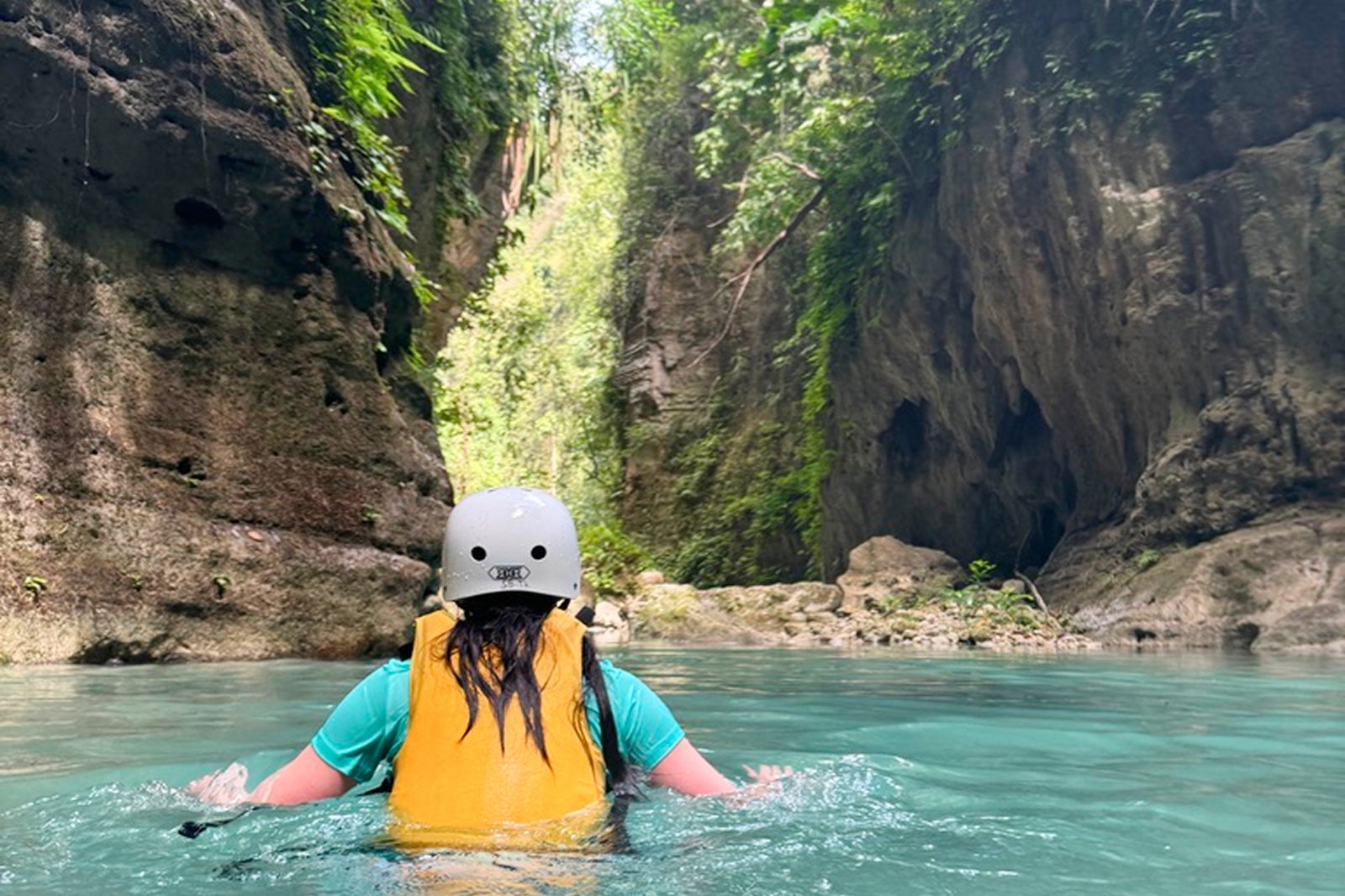
Kawasan Falls canyoneering is widely regarded as one of the best adventure activities in Southeast Asia and after doing it, it’s hard to argue. The experience involves navigating a dramatic river canyon in Badian, Southern Cebu, through a series of cliff jumps (ranging from 2–10 metres), natural waterfall slides, river swimming, rope swings and a short rappel down a waterfall face, ending at the iconic turquoise pools of Kawasan Falls itself.
The canyon is stunning narrow walls draped in jungle green, the river running clear turquoise below and the whole experience is guided by local operators who know every metre of the route.
Essential information for Kawasan canyoneering:
- Duration: 4–5 hours for the full route
- Cost: ₱1,200–₱1,800 per person including guide, safety equipment and entrance fees
- Difficulty: Moderate. No prior experience required but you must be a confident swimmer. All cliff jumps are optional, you can choose your height or skip any jump
- Start point: Matutinao, Badian, approximately 2.5–3 hours from Cebu City by bus
- Best time to book: In advance, especially December–April (peak season). This activity sells out regularly
Safety warning: Never attempt Kawasan canyon without a registered local guide. The route involves fast-moving water, submerged rocks and sections that are impassable at high water without expert knowledge of the route. Routes are sometimes closed after heavy rainfall. Always check conditions before travelling to Badian.
Kawasan with children: Canyoneering has a minimum age of approximately 7–10 years (varies by operator) and requires confident swimming. Teenagers will love it. For younger children or non-swimmers, visiting Kawasan Falls without canyoneering is a beautiful alternative hike 15–20 minutes from Matutinao village to reach the turquoise falls and swim in the pools below. Entrance is approximately ₱100 and suitable for all ages.
Kawasan for couples: Book a private guide rather than a group tour, you’ll have the canyon largely to yourselves. The arrival at Kawasan Falls after completing the route together is one of those travel moments you’ll still talk about years later.
Kawasan for solo travellers: Group tours are the most economical option and a great way to meet other travellers on the South Cebu circuit. Book via Klook or your hostel at least 2–3 days in advance during peak season.
🏄 Book Kawasan Falls canyoneering on Klook
🗺 Browse Kawasan Falls tours on GetYourGuide
Moalboal Sardine Run & Sea Turtle Snorkelling: What you need to know
Moalboal is a small diving and snorkelling town on the southwest coast of Cebu, approximately 2–2.5 hours south of Cebu City. It’s home to two of the most extraordinary underwater experiences available anywhere in the Philippines and remarkably, both can be done from the shore with nothing more than a snorkel and fins.
The Moalboal sardine run a swirling, constantly moving bait ball of millions of sardines that hovers just metres from Panagsama Beach. You wade in from the shore and snorkel out, no boat required. The sardines form a dense, shimmering mass that banks and turns as one organism, responding to every shadow and movement around it.
Sea turtle snorkelling at Moalboal just beyond the sardine ball, sea turtles feed regularly along the reef. They’ve become so accustomed to snorkellers that they barely acknowledge your presence allowing remarkably close encounters in completely natural, unmanipulated conditions.
Snorkel gear hire at Panagsama Beach costs approximately ₱150. For certified divers, Moalboal has multiple dive operators offering wall dives, night dives and deeper reef expeditions.
Moalboal with children: The sardine run and turtle snorkelling are accessible for children aged 6+ who are comfortable with a mask and snorkel. Water entry from Panagsama Beach is rocky — water shoes are essential for children and adults. Non-swimmers can see the sardines from the shoreline during particularly active periods.
Moalboal for couples: Go early, ideally just after sunrise before day-trippers arrive and the sardine ball is at its most active and undisturbed. Moalboal also has several good beachside restaurants for a sunset dinner after a full day in the water.
Moalboal for solo travellers: Panagsama Beach has a strong backpacker and diving community. Several hostels and dive shops have social common areas where finding dive buddies or joining group snorkel trips is easy.
🗺 Browse Moalboal snorkelling & diving tours on Klook
North Cebu Travel Guide: Bantayan island & Malapascua island
Most first-time visitors to Cebu focus entirely on Southern Cebu and that’s the right call for a short trip. But if you’re spending 7+ days on the island, or returning for a second visit, North Cebu offers two islands worth going out of your way for.
Bantayan Island Cebu a flat, relaxed island off Cebu’s northern tip with long stretches of white sand, calm turquoise water and an unhurried Filipino holiday atmosphere. Hugely popular with local Filipino families but seeing only modest international visitor numbers. Getting there: bus from Cebu City to Hagnaya Port (approximately 3.5 hours) then a 1-hour ferry to Santa Fe. Best for: families wanting calm beaches, couples wanting to escape the tourist trail, and slow travellers. Plan a minimum of 2 nights.
Malapascua Island Cebu, a tiny, beautiful island famous in the scuba diving world for reliable thresher shark sightings at Monad Shoal one of only a handful of places globally where you can regularly see these deep-water sharks. For non-divers, Bounty Beach is genuinely lovely and the island is peaceful. Getting there: bus to Maya Port (approximately 3.5–4 hours) then a 30-minute bangka crossing. Best for: divers, adventure travellers, those wanting a quieter Cebu experience. Plan a minimum of 2 nights.
Cebu with Kids: Complete family travel guide 2026
Is Cebu good for families? Yes, it’s one of the best destinations in the Philippines for travelling with children. Filipino culture is deeply family-oriented; children are welcomed warmly everywhere, and local people will go out of their way to make families feel at home. The infrastructure is good enough to navigate with kids without excessive planning, and the range of experiences suitable for different ages is genuinely broad.
Best Family-Friendly Activities in Cebu
- Whale shark watching in Oslob, children aged 6+ can snorkel in the water; younger children watch from the boat. One of the most memorable wildlife experiences you can give children anywhere in the world. Life jackets provided for all ages
- Tumalog Falls shallow, calm pool at the base of a beautiful waterfall. Perfect for children to play and cool down after an early whale shark start
- Moalboal sardine run: Children who can snorkel will be completely captivated. Even non-swimmers can see the sardine ball from the shoreline during active periods
- Sumilon Island sandbar shallow, calm water ideal for children; beautiful and accessible snorkelling for older kids
- Kawasan Falls swimming (without canyoneering) the turquoise pool at the base of Kawasan Falls is magical, accessible via a 15-minute walk and suitable for all ages. Entrance approximately ₱100
- Bantayan Island calm, shallow beaches with no strong currents. Excellent family resort feel with a genuinely local atmosphere
- Cebu City historical circuit Magellan’s Cross and Basilica del Santo Niño are walkable, culturally interesting and take about 2 hours. Good introduction to Philippine history for older children
Family travel tips for Cebu
- Book a private van for Southern Cebu, this is non-negotiable with children. A private transfer gives you control over stops, pace and temperature. Split the cost between families for excellent value
- Stay in Moalboal as your South Cebu base, with more accommodation options and better facilities than Oslob. Day-trip to Oslob for whale sharks with an early start, return to your Moalboal base in the afternoon
- Book Oslob in advance for families who need a specific time slot and a private guide. Do not leave this to the day, especially in peak season
- Water shoes are non-negotiable for rocky shore entry at Moalboal, reef areas and canyoneering approaches all require them for children and adults
- Reef-safe sunscreen is required at most marine sites bring it from the UK (harder to find and more expensive locally). Children’s reef-safe formulas are available from UK pharmacies and health shops
- Food for children rice, grilled chicken, fresh fish, noodles and tropical fruit are universally available at very low prices. SM City Cebu and Ayala Centre have fast food options for the days when only a familiar meal will do
- First aid kit, bring a small travel first aid kit including antiseptic wipes, plasters and antihistamine. Minor cuts from reef or rock are common in water activities
Cebu for Couples: Most romantic experiences & Travel tip
Is Cebu romantic? Genuinely, yes. The combination of dramatic natural scenery, beautiful beaches, excellent food and the warmth of Filipino hospitality creates conditions that are hard not to enjoy as a couple. Whether you want active adventure days or slow, languid beach evenings, Cebu delivers both.
Best Romantic Experiences in Cebu for Couples
- Sunrise whale shark watching, Oslob, book the 5–5:30 am slot. The experience at first light, small crowds, extraordinary golden water, the scale of the whale sharks in the morning calm — is completely different from the busy mid-morning scene
- Sumilon Island sandbar at low tide is a thin strip of white sand surrounded by turquoise water in every direction, with almost nothing else in sight. One of the most naturally beautiful and romantic settings in the Philippines. Check low tide times the night before and time your visit accordingly
- Kawasan canyoneering together can book a private guide rather than a group tour. Shared adventure creates shared memories, and arriving at the turquoise Kawasan Falls together after completing the canyon route is genuinely special
- Sunset dinner on Panagsama Beach, Moalboal, fresh grilled seafood with a cold San Miguel as the sun sets over the Tañon Strait. Affordable, beautiful, unhurried
- A night on Bantayan Island, quiet beaches, hammocks between palm trees, and a pace of life that makes it easy to completely switch off. Two or three nights here is a genuinely romantic detour away from the more-visited South Cebu route
- Cebu City food evening share a kilo of lechon at a local spot, walk Colon Street in the evening, then end with cocktails at a rooftop bar in IT Park. A proper city evening that feels like the Philippines, not a resort
Couples Travel tips for Cebu
- Hire a private driver for at least part of the South Cebu route. The flexibility to linger, stop on a whim and go at your own pace transforms the experience
- Book a seaview room in Oslob for your whale shark night, waking up to the water and walking 3 minutes to the site in the pre-dawn quiet is worth the small premium
- For Kawasan, request a private guide slot rather than joining a group; you’ll have the canyon largely to yourselves for the most photogenic sections
- Consider adding Bantayan Island at the end of a South Cebu trip, 2 nights there, after the activity-heavy south gives the trip a completely different, slower final chapter
Cebu for solo travellers: Safety, tips & best experiences
Is Cebu good for solo travel? It’s one of the best islands in the Philippines for it. The South Cebu backpacker route is well-established and easy to navigate independently. There’s an active hostel scene in Cebu City, Moalboal and Malapascua. And Filipinos are genuinely among the most welcoming people you’ll encounter anywhere in Southeast Asia solo travel here rarely feels lonely.
Is Cebu safe for Solo Travellers?
Yes. Cebu is one of the safer Philippine destinations for tourists, including solo female travellers. The well-worn backpacker route through Southern Cebu is particularly safe and social. Standard precautions apply: use Grab rather than unlicensed taxis (especially at night), keep an eye on belongings in crowded markets like Carbon, don’t display expensive electronics unnecessarily, and stick to lit areas after dark. Solo female travellers visit and recommend Cebu regularly.
Best Experiences for Solo Travellers in Cebu
- The South Cebu backpacker route: Cebu City → Oslob → Moalboal is one of the most social and well-trodden backpacker routes in the Philippines. You will meet people doing the same route at every point
- Group canyoneering at Kawasan: Group tours mix travellers and are genuinely social. One of the best ways to meet people on the circuit. Book via Klook or your hostel
- Moalboal hostel scene: Panagsama Beach hostels have strong social common areas and organise group night dives, snorkel trips and island days. Easy to find dive buddies
- Malapascua diving community: Small, tight-knit, internationally mixed. The dive community on Malapascua is one of the friendliest in the Philippines for solo divers wanting to explore and improve
- Cebu City street food and markets: Eating solo in the Philippines is genuinely enjoyable. Locals are curious, conversations start easily, and sutukil and street food are perfectly suited to solo eating
Solo Travel Tips for Cebu
- Download Grab before you lan, single most useful app for solo travellers in the Philippines. Removes all transport negotiation
- The public bus is fine for solo travel: Cebu City South Terminal is straightforward to navigate. Other travellers heading to Oslob and Moalboal will be on the same bus. Cheaper than private transport and perfectly comfortable
- Ask your hostel about shared vans, most Cebu City hostels organise or can connect you with shared private vans to Oslob, which work out cheaper than booking your own and are more comfortable than the bus
- Stay in social hostels first, a night in a Cebu City hostel before heading south is the fastest way to find travel companions for the South Cebu route
- Buy your SIM at SM City on arrival. Smart or Globe 30-day data SIMs cost ₱299–₱499 and are essential for using Grab throughout the trip
Where to stay in Cebu: Best areas & accommodation guide
Where to Stay in Cebu City
The IT Park / Lahug area and Ayala Centre district offer the best combination of transport links, restaurants and accommodation options. Budget guesthouses from ₱500–₱1,200 per night. Mid-range hotels ₱2,000–₱4,500 per night. Upscale options (Radisson Blu, Waterfront Hotel) from ₱5,000+ per night.
🏨 Find the best hotels in Cebu City on Hotels.com
Where to stay near Oslob (Whale Shark area)
Staying as close to the whale shark watching site as possible is strongly recommended the experience starts before dawn and you don’t want a long transfer in the dark. Look for guesthouses within a 5-minute walk of the site. Budget around ₱800–₱1,500 per night for a basic guesthouse; seaview rooms are available and worth the small premium.
Where to stay in Moalboal
Panagsama Beach is the best base for the Moalboal area, it puts you directly on the sardine run shore and within easy reach of the Kawasan departure point. Options range from basic hostel dorms (₱400–₱800 per night) to mid-range beachfront resorts (₱2,000–₱4,500 per night).
🏨 Find hotels in Moalboal on Hotels.com
Where to Stay on Bantayan Island
The main beach area around Santa Fe has the best concentration of accommodation. Very affordable, good beachfront rooms from ₱1,200–₱2,500 per night. Book ahead in Holy Week (Easter) when the island is extremely popular with Filipino domestic tourists.
🏨 Find hotels on Bantayan Island on Hotels.com
Cebu itinerary ideas for first-timers: 3 to 7+ Days
3-day Cebu itinerary (Southern Cebu essentials): Day 1, arrive Cebu City, overnight transfer to Oslob. Day 2, whale sharks at dawn, Tumalog Falls, Sumilon Island, transfer to Moalboal. Day , sardine run and sea turtles, afternoon return to Cebu City. Tight but very doable.
4-day Cebu itinerary (recommended for first-timers): Add Kawasan Falls canyoneering between Oslob and Moalboal. This is the exact route covered in our 4-Day Cebu DIY Itinerary
5–6 day Cebu itinerary: Open with a full day in Cebu City (lechon dinner, Magellan’s Cross and Basilica in the morning) then follow the 4-day South Cebu route. Use remaining days for a night on Bantayan Island for beaches and slow travel.
7-day Cebu itinerary: As above, adding Malapascua Island for thresher shark diving at the end, or extending south with an extra beach day at Moalboal.
7-day family Cebu itinerary:
- Day 1: Arrive Cebu City.
- Day 2: City sights and lechon.
- Day 3: Private van to Oslob for whale sharks and Tumalog Falls.
- Day 4: Sumilon Island, transfer to Moalboal.
- Day 5: Sardine run, sea turtle snorkelling and beach day.
- Day 6: Kawasan Falls (swimming, not canyoneering for younger children; canyoneering for older children and teens).
- Day 7: return to Cebu City for departure.
10-day Philippines island hop starting from Cebu: Combine Cebu with Bohol (2 days by fast ferry) and Siquijor for the full Visayas experience. See our Philippines 10-Day Island Hopping Itinerary
Cebu travel costs & budget guide 2026
Cebu is excellent value for UK travellers. Here’s a realistic breakdown of what to expect in 2026:
| Item | Approximate Cost |
|---|---|
| Domestic flight Manila → Cebu (one way) | ₱800–₱2,500 |
| Airport bus to SM City Cebu | ₱240 |
| Grab from airport to city centre | ₱200–₱350 |
| Bus Cebu City → Oslob (one way) | ₱350–₱450 |
| Bus Cebu City → Moalboal (one way) | ₱150–₱200 |
| Private van hire Cebu City → Oslob (whole vehicle) | ₱3,000–₱5,000 |
| Oslob whale shark watching (entry fee, no guide) | ₱500 per person |
| Tumalog Falls entrance | ₱50 |
| Sumilon Island bangka + entrance fee | ₱500–₱700 per person |
| Kawasan Falls canyoneering (guide + equipment) | ₱1,200–₱1,800 per person |
| Kawasan Falls visit only (no canyoneering) | ₱100 entrance |
| Moalboal snorkel gear hire | ₱150 |
| Lechon per serving at a local restaurant | ₱150–₱300 |
| Budget guesthouse per night | ₱800–₱1,500 |
| Mid-range hotel per night | ₱2,000–₱4,000 |
| Food per day (mix of local restaurants) | ₱400–₱800 |
Daily budget summary (excluding international flights):
- Solo backpacker / budget: ₱2,000–₱3,000 per day (hostel dorm, local food, public buses)
- Mid-range / couple: ₱4,000–₱7,000 per day for two (private room, mix of local and restaurant meals, occasional private transport)
- Family of four: ₱8,000–₱14,000 per day (private rooms, private van, activity costs for all family members)
Best time to visit Cebu, Philippines in 2026
November to May is the dry season in Cebu and the best overall time to visit. Clear skies, calm seas for island hopping and bangka boat trips, excellent snorkelling visibility and reliable conditions for outdoor activities including canyoneering.
December to April is the peak season, the absolute best weather, peak whale shark season in Oslob, and ideal conditions for the Sumilon Island sandbar. Also the busiest and most expensive period; book accommodation and activities in advance.
June to October is the wet season and brings rain and the risk of typhoons. The whale sharks remain in Oslob but seas can be rougher for bangka trips, and Kawasan canyoneering routes sometimes close after heavy rain. Significantly fewer tourists and noticeably lower accommodation prices.
💡 Wet season tip: Rain in Cebu typically arrives as afternoon downpours rather than all-day grey skies. Morning activities, whale sharks, canyoneering, island hopping are usually unaffected. May and October sit at the edges of the wet season and often offer the best value with reasonably good weather.
What to pack for Cebu Philippines: packing list 202
- Reef-safe sunscreen required at Oslob, Sumilon and other marine protected areas. Harder to find and more expensive locally. Bring from the UK
- Water shoes or old trainers, essential for Kawasan canyoneering, the rocky beach entry at Moalboal, and any reef walking
- Dry bag or waterproof phone case, essential for canyoneering, bangka boat trips and all water activities
- Lightweight rain jacket, useful in both wet and dry season for air-conditioned buses and occasional afternoon showers
- Cash in Philippine pesos, many sites, local restaurants and smaller operators are cash-only. Withdraw enough in Cebu City before heading south; ATMs in Oslob are unreliable
- Reef-safe mosquito repellent, particularly important in the evenings at Oslob, Moalboal and rural South Cebu areas
- Snorkel mask and fins, optional but worth packing your own if you have them. Hire gear varies in quality
- For families: Children’s UV-protective swimwear, children’s reef-safe sunscreen, water wings for non-swimmers, compact first aid kit (antiseptic, plasters, antihistamine)
- For divers: PADI or equivalent certification card, rash vest, dive computer if you have one (rental is available but your own is always better)
Cebu Philippines, Travel FAQs 2026
Do UK citizens need a visa to visit Cebu, Philippines?
No. UK passport holders receive 30 days visa-free entry to the Philippines on arrival. This can be extended to 59 days at a Bureau of Immigration office in Cebu City. Ensure your passport has at least 6 months’ validity beyond your intended departure date from the Philippines.
Is Cebu safe for first-time travellers?
Yes. Cebu is one of the safer destinations in the Philippines for tourists. Standard precautions apply, use Grab rather than unlicensed taxis, keep an eye on belongings in busy markets such as Carbon Market, and avoid displaying expensive electronics unnecessarily. Solo female travellers visit Cebu regularly and the South Cebu backpacker route is considered safe and social.
What is the best time of year to visit Cebu?
The best time to visit Cebu is November to May (dry season), with December to April being the peak period for whale shark watching, island hopping and outdoor activities. June to October is wet season, rain is typically in afternoon showers rather than all day, and prices are significantly lower.
How many days do you need in Cebu?
A minimum of 4 days covers the Southern Cebu highlights whale sharks in Oslob, Kawasan canyoneering, and the Moalboal sardine run. Five to six days allow you to add Cebu City properly. Seven or more days lets you add a Bantayan or Malapascua extension. For families, allow at least 6–7 days to avoid rushing.
Can I do Southern Cebu as a DIY trip without a guide?
Yes, for most activities. Getting to Oslob and Moalboal by public bus from the South Terminal is straightforward. Whale shark watching and the Moalboal sardine run can both be done independently. Kawasan Falls canyoneering always requires a registered local guide never attempt the canyon route independently as it involves dangerous water conditions without expert knowledge of the route.
Should I book whale shark watching and canyoneering in advance?
For Oslob whale sharks, turning up on the day is possible if you arrive before 6am. Families and peak season visitors (December–April) should book a specific time slot in advance. Kawasan canyoneering should always be booked in advance, it regularly sells out during peak season and popular weekends.
Is Cebu good for families with young children?
Yes, Cebu is one of the most family-friendly islands in the Philippines. Whale shark watching (children aged 6+ in the water, younger children watch from the boat), Tumalog Falls, the Moalboal sardine run, Sumilon Island sandbar and Bantayan Island beaches are all excellent for families. Filipino culture is deeply family-oriented; children are welcomed warmly everywhere.
What currency is used in Cebu and can I pay by card?
The currency is the Philippine Peso (₱). Cash is essential, most activity operators, local restaurants and smaller guesthouses in Southern Cebu are cash-only. ATMs are available in Cebu City and Moalboal but are unreliable in Oslob. Withdraw enough cash in Cebu City before heading south to cover your entire South Cebu leg.
What SIM card should I get for Cebu Philippines?
Buy a local SIM at the airport or SM City Cebu on arrival. Smart and Globe are the two main providers. Smart generally has better coverage in rural Southern Cebu areas including Oslob. A 30-day unlimited data SIM costs approximately ₱299–₱499. A working SIM is essential for using Grab throughout the island.
Is Cebu good for non-swimmers?
More than you might expect. The whale shark experience includes a life jacket and stays close to the boat, non-swimmers can participate. The Moalboal sardine run is accessible in very shallow water from the shore. Tumalog Falls and Kawasan Falls (without canyoneering) involve no swimming at all. Cebu City’s historical sights, food scene and markets are entirely land-based. Non-swimmers will not feel excluded from the experience.
📖 Want the full day-by-day detail? Read our Cebu 4-Day DIY Itinerary: Oslob, Moalboal & Kawasan Falls
🏝 Extending your trip to Bohol? Read our Bohol Itinerary: Chocolate Hills, Tarsiers & Panglao Island
🗺 Planning the full Philippines island hop? See our Philippines 10-Day Island Hopping Itinerary: Cebu, Bohol & Siquijor


Leave a Reply